Gladwell's Ideas On Instrumental Vs Expressive Gun Violence
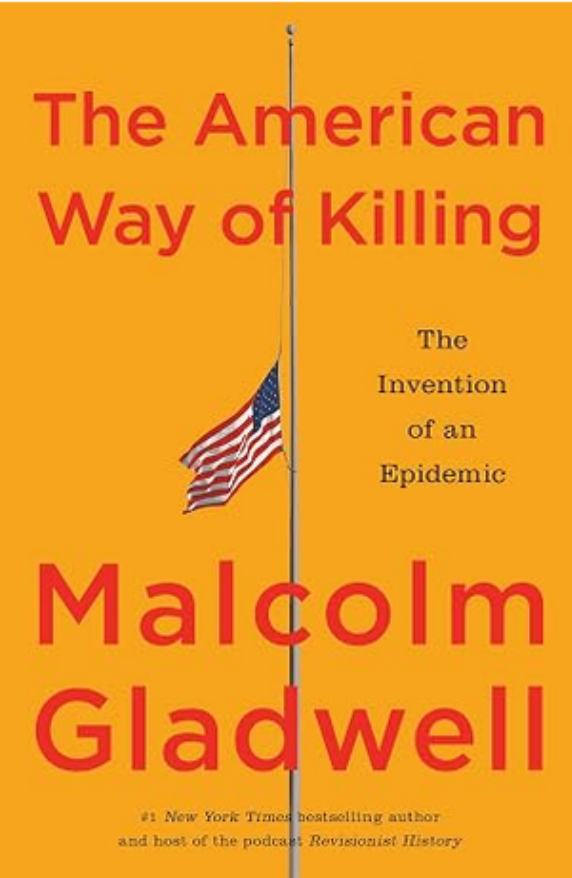
As I read The Invention of an Epidemic The American Way of Killing by Malcolm Gladwell, I think of my years in university taking some of the most interesting Criminology and Sociology courses.
When most of us picture a murder, we think of Netflix crime dramas or detective novels. We imagine a calculated mastermind plotting for extreme wealth, a bank robber, or rival gangs fighting over drug turf. In those stories, violence is just a cold, rational tool used to get something tangible.
In The American Way of Killing, Malcolm Gladwell argues that most people completely misunderstand gun violence in the U.S.
Gladwell discusses such debates on gun policy is deadlocked because politicians and voters treat gun crime like a series of calculated moves and the weapon/gun as a secondary item. And, of course there are tremendous wealthy powerful lobby groups such as the NRA that argue for every law abiding American should have a cache of guns due to the Second Amendment that protects an individual's right to keep and bear arms.
In reality, most lethal shootings come from something completely different, called expressive violence.
What is the difference between planned gun violence and spontaneous gun violence?
Instrumental violence is planned, calculated, and there are specific goals. In such scenarios, gun violence is simply a means to an end. Pop culture, CSI dramas, mysteries to Law & Order, are portrayed as instrumental gun killings because clear motives make for logical plots in movies, Netflix series, and violent crime novels. Instrumental violence is commonly known as first-degree and many second-degree murders.
Expressive violence, on the other hand, is spontaneous, reactive, and fueled by super charged emotion. It sparks out of personal friction, hatred, wounded pride, or a perceived disrespect in the stress of the moment. Here, the gun violence is an impulsive attempt to settle a score or retaliate with a show of power right then and there. Expressive violence is usually third-degree murder.
Gladwell explains there is a disconnect of real instrumental violence on TV and in some specific novels. In fact, statistics show, majority of real-life gun homicides have always been overwhelmingly emotional expressive violence of power.